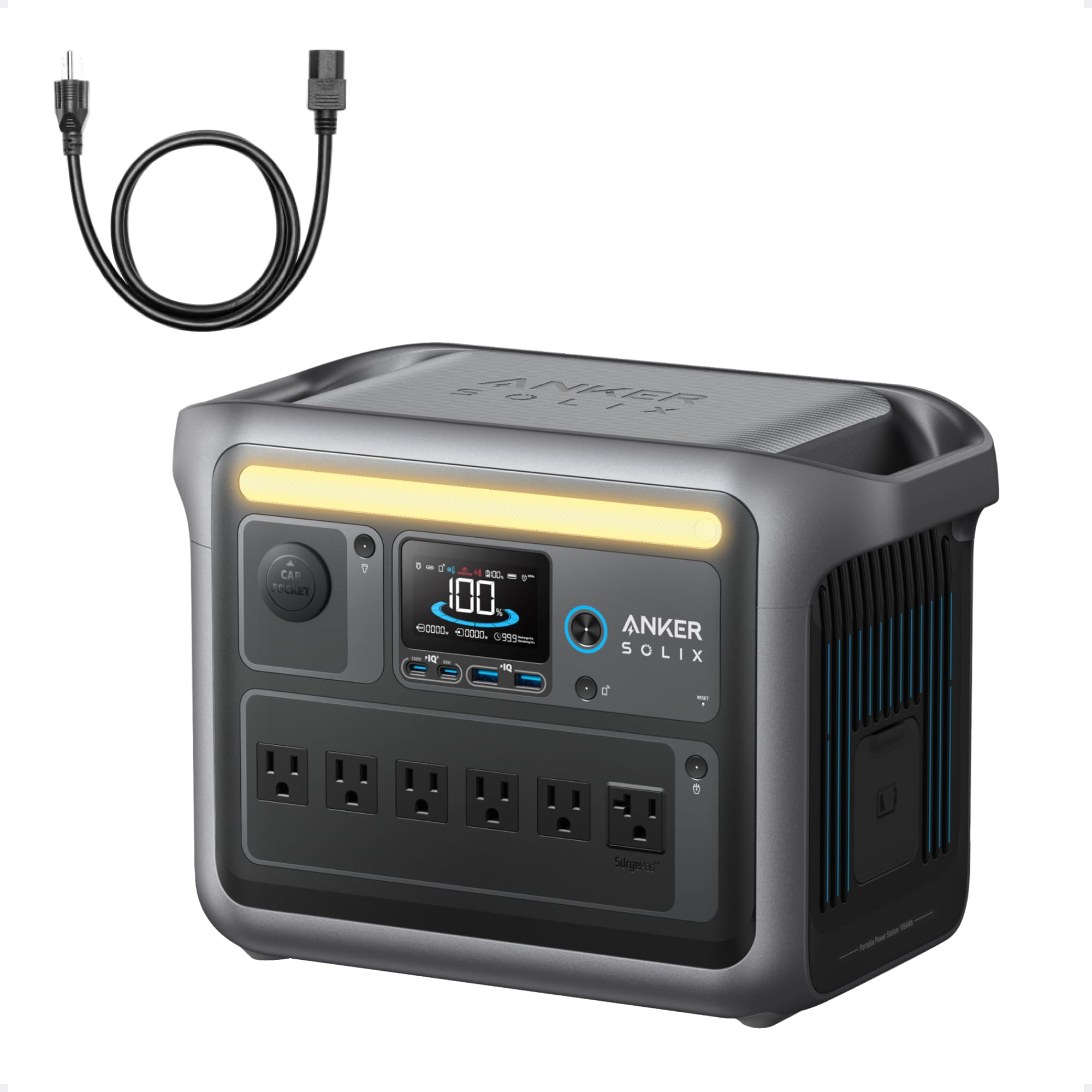
How to choose the right portable power station
Start by adding up what you want to run, then check capacity, output and outlets. If you are weighing it against a gas generator, read our carbon monoxide guide first.
Capacity in watt-hours
Capacity in Wh is the energy stored. Add up the devices you want to run and divide the station's usable Wh by their watts for a rough runtime. Expect less than the label says, because of conversion losses. Our lantern guide shows lower-power options. Make a short list of the devices you would run, such as phones, lights and a fan, and note the watts printed on each label before you compare capacities.
Continuous output
Continuous output is the most the station can supply steadily; surge is a short peak for starting motors. Check the listing against the watts on your devices' labels, and leave some margin. If two devices run together, add their watts, and check the surge figure for anything with a motor.
Outlet mix
Look for AC outlets for household plugs, USB-C PD for phones and laptops and a 12V port for car-style accessories. A station with plenty of capacity but the wrong outlets is no use. Count the number of AC outlets against the devices you plan to plug in at once, and check the USB-C PD wattage if you want to charge a laptop.
Solar input and recharge time
Check the maximum solar wattage the maker allows, and whether a solar panel is included or sold separately. Recharge times are maker-stated and depend on sun and panels. If you rarely camp in open sun, a station that recharges from a car or wall outlet before the trip may suit you better than one that depends on a panel.
Weight
Capacity and weight rise together. For car camping the trunk does the lifting, but you still have to move it. Check the Weight column and the handles. Look for handles that are easy to grip, since you will lift it in and out of the car.
Battery chemistry and cycle rating
Different battery chemistries age differently. Maker-stated cycle ratings show how many full charges the maker expects. Treat them as marketing, and compare warranties. Look at the warranty length, which tells you how long the maker stands behind the battery, and read what it excludes.